If you’ve decided you are going to travel across the Channel to France, it's important to remember that its not just driving on the right hands side of the road that is diffferent in France. There are a number of other things you need to be aware of that are different from driving in the UK.


There are many Rules, Laws and Stipulations that need to be adhered to and there are a number of things that are compulsory for you to have with you at all times. If your stopped by Police or the Authorities in France and are driving without them, you can face a hefty fine.

What MUST you be carrying with you?;
The following Items are items that you must be carrying with you in your vehicle at all times in France.
• V5 vehicle registration document.
• Full driving licence (The card part is fine, there is no requirement for a paper copy) - There is talk that should there be a No-Deal Brexit then in order to drive in France , you may need to apply for an International Driving Permit. It would be wide to keep an eye on this if you are looking to travel for some winter sun later in the year.
• MOT certificate – if your vehicle has been subject to an MOT.
• Insurance documents.
• Breathalyser kit – Carrying a breathalyser was compulsory in France and the rule used to be that it must be calibrated to the French alcohol limit. However, there is no longer a fine for not carrying one in your vehicle.
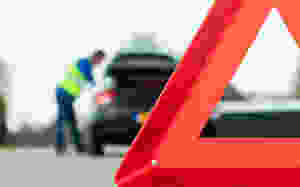
• A red warning triangle that gets placed behind your vehicle if you breakdown.
• Spare bulb kit – These can easily and cheaply (less than £5) be bought from eBay, Amazon or your local Halfords etc.
• Reflective bib/jacket (Around £3 each) for every passenger in the vehicle. These must be within reach of all passengers in the vehicle. There have been instances where jackets in the boot have been deemed insufficient!
• Glasses – if you need glasses to drive you'll need them with you in France.
• Headlight deflectors – VW sell a headlight cover/protector for the T6/T5 onto which the exact place is marked for adding the deflector tape. (They are available from any VW Van Centre)
• A GB or European compliant marked number plate or rear mounted GB sticker on your vehicle.
Vignettes
New emission zones were introduced across France in 2017 and are mainly in the cities. These cities are Chambery, Grenoble, Lyon, Lille, Marseille, Paris, Strasbourg and Toulouse.
The stickers you need to display for these zones are called Crit’Air Vignettes. The French Authorities have created six categories (1 being lowest emissions and 6 being highest) and each category has been designated a colour which you display in a badge/sticker on your vehicle to indicate its emissions.
The colour coded badges you need to display cost just around €3. Again, as with everything on French roads, failure to display this Vignette is a fine of approximately £120.
Worth noting is that most of the cities that utilise the emissions zones only operate the emergency scheme at times of very high pollution levels. However, if you plan to travel to Paris, it is important to note that Paris has a permanent emissions zone on weekdays during the daytime. This zone bans any diesel vehicles prior to the Euro 04 classification from entering.
If you need to check the current and up to date emissions ozones and rules, go to http://urbanaccessregulations.eu/
Items worth carrying just in case you wander into other European Territories
Although these items are not compulsory in France, they ar in some other European countries and therefore, in case you decide to detour into other territories, these are worth carrying just in case.
• Fire extinguisher (£8 at Amazon)
• Torch (must be in working order so wind up is a good option - £3 at Amazon)
• First aid kit (£7 at Amazon)
• Copy of your Breakdown Cover documents
Things to Leave at Home
Although they are not as popular as they once were, if you have a speed camera detector fitted in your car you will need to uninstall it and leave it at home. Speed camera detectors are illegal in France. If you are stopped by Police and simply have one inside your vehicle (doesn't have to be on or activated), then you could be fined €1500!
Other Important things on French Roads to be Familiar With
- Signs & Traffic Lights – French Traffic lights work in a slightly different sequence to those in the UK. When you are on stop at a red light, the lights will eventually change straight from Red to Green without the Amber in between that you’ll be used to in the UK. Don't get caught sitting idly at the lights once they've changed!
- Give Way to the Right – On French roads, if there are no markings on the road then always remember the give way to the right when there is an opportunity to do so. The locals will drive to this rule so its an important one to remember!
- Drink Drive Limits – In France the current alcohol limit for driving is 0.5mg/ml of blood. However, if it's less than 3 years since you passed your driving test then the alcohol limit is reduced to 0.2mg/ml. These limits are much much lower than the limits in the UK.
- Parking –It is important to learn that if there is an unbroken yellow line along the side of the road then you’re not allowed to park under any circumstances. You are however, allowed to briefly stop on these lines.


Speed Limits
Unlike the speed lints on the road in the UK, speed limits in France can also vary according to road conditions and weather conditions. The speed limit can reduce if its raining. Roughly, you can use the below as guidance;
- Motorways (A roads in France) – 130km/h (80mph) (minimum 80km/h [50mph]) in the dry and 110km/h (70mph) in the wet
- Motorways near Urban areas & Dual Carriageways – 110km/h (70mph) in the dry and 100km/h (60mph) in the wet
- Rural Areas – 80km/h (50mph)
- Urban & Built Up Areas – 50km/h (30mph) in dry or wet conditions (Just like most of the UK)


Toll Roads
Most French Motorways have tolls along them. Driving in France can end up being quite expensive. Any 'A' roads will likely have a section with a toll on them.
Unfortunately the toll are not uniform and each one can be of a different value because each road is owned by a different company! Like the UK, the type of vehicle you are using dictates the charge you need to pay. Remember, if you have an elevating roof campervan then your vehicle is a passenger vehicle not a commercial vehicle and it is also under 2m in height. Both of these are criteria for the charges at the tolls.
Payment at the tolls can either be made in cash or by debit/credit card. It is best to let your passenger sort the payments out, remember, the booths will be on the other side of the vehicle as they are designed for left hand driver vehicles!
You can buy in advance, a ‘Toll Badge’ which is the equivalent to the UK TAG system at Tolls. You can buy this from (https://abonnement.vinci-autoroutes.com/Coordonnees?cod_crcl=EVA3&cod_promo=&typo=P).
This badge/sticker gets stuck on your windscreen and allows you to drive through the tolls without stopping. You can pass through the Tag only gates at the tolls and not queue for the manned booths. The badge itself is free (other than postage to you) and act as almost a credit card for the tolls where you will be charged for all of its uses over a period of time.

No comments:
Post a Comment